The right sump filter can dramatically improve water clarity, filtration efficiency, and overall tank health. Below are five high-performing sump filter media options suited for freshwater and saltwater setups. Each product highlights distinct filtration benefits—from mechanical and biological filtration to surface area and ease of use—so you can compare based on your tank size, bioload, and maintenance preferences.
| Product | Brand | Notes |
|---|---|---|
| Aquatic Experts FilterFirst Aquarium Filter Pad | Aquatic Experts | Dual-density, cut-to-fit, freshwater/saltwater compatible |
| Aquatic Experts Classic Bonded Filter Pad | Aquatic Experts | Blue/white bonded pad, bulk roll, durable poly fibers |
| Reefing Art Ceramic Bio Filter Media | Reefing Art | Vast surface area for bio filtration, box of 24 pcs |
| AQUANEAT Bio Sponge Filter Media Pad | AQUANEAT | Open cell foam, cut-to-fit, mechanical and bio filtration |
| hygger 3/4″ Thick Filter Floss | hygger | Multi-layer micro fiber, cut to fit, supports bio filtration |
Aquatic Experts FilterFirst Aquarium Filter Pad

Two-layer filtration combines an open-fiber top layer that traps larger particles with a dense bottom layer that captures finer debris. This dual-density design helps produce clearer water in freshwater, reef, and saltwater tanks. When cleaned, the pad reveals significantly more trapped debris than typical pads, improving overall filtration efficiency. It can be cut to fit most filters and is suitable for wet/dry filters, sumps, canister filters, and aquaponics systems, making it a versatile media for various sump setups.
Aquatic Experts Classic Bonded Filter Pad

This blue and white bonded filter pad is a popular, multipurpose media designed for both freshwater and saltwater aquariums. Its open fiber construction promotes water flow and helps prevent premature clogging, while durable polyester fibers deliver long-lasting performance. The roll can be cut to fit most filters, providing cost savings versus pre-cut materials. When paired with activated carbon, it offers a flexible filtration solution for prefilters in wet/dry filters, sumps, canister systems, and aquaponics setups.
Reefing Art Ceramic Bio Filter Media
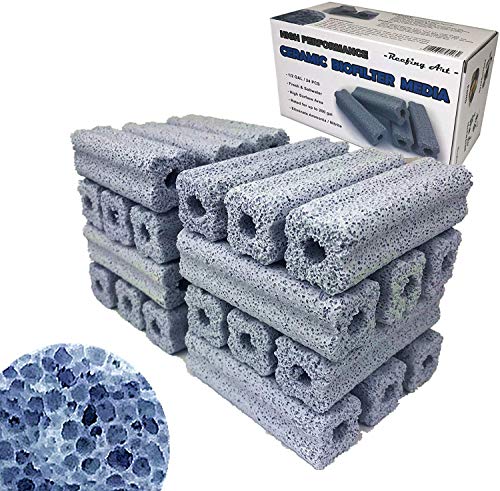
Each box contains 24 pieces of ceramic media designed to provide vast surface area and a porous internal structure for superior biological filtration. By enhancing ammonia and nitrite removal through increased bio-media contact, these ceramic spheres support stable water parameters for freshwater, ponds, and saltwater tanks alike. The open flow facilitates oxygen exchange, contributing to long-term system stability and healthier microbial colonies in sump and canister configurations.
AQUANEAT Bio Sponge Filter Media Pad

This two-pack features open-cell foam pads designed for cut-to-fit applications. The open-cell structure provides a large internal surface area for filtration, supporting both mechanical and biological processes. Suitable as a pre-filter in any aquarium or pond setup—sump, wet/dry, canister, or HMF DIY projects. The pads enhance debris capture while preserving beneficial bacteria critical to bio-filtration.
hygger 3/4 Inch Thick Filter Floss

Multi-layer micro-fine polyester fiber in a bulk pad efficiently removes microscopic dirt, uneaten food, feces, and decaying plant matter, improving clarity. The media supports both mechanical filtration and bio-filtration by providing a substrate for beneficial bacteria. It’s easy to cut to size and can suit different filter types, including hang-on back, canister, internal, sump, and wet/dry systems, making it a flexible sump option.
AYWFEY Filter Socks

These 200-micron filter socks are designed for a robust mechanical filtration task, reducing ammonia-producing organic matter and capturing debris and excess food. Made from durable polyester, they are reusable and designed for long life with strong stitching. Their design aims to balance filtration efficiency with ease of cleaning and reuse in sump filters or overflows in ponds and aquariums.
Buying Guide: Key Purchase Considerations
- Filtration type and tank needs: Evaluate whether you need primarily mechanical filtration, bio-filtration, or a combination. Media with a mix of open and dense fibers or ceramic bio media can support both.
- Tank size and bioload: Larger tanks with higher bioload benefit from media with more surface area and dual-density filtration to reduce waste more effectively.
- Compatibility and cut-to-fit options: Choose pads and media that can be trimmed to fit your sump, wet/dry, or canister configuration to maximize contact with the flow.
- Durability and maintenance: Durable media reduces waste and replacement costs. Consider media that traps debris while allowing easy cleaning to minimize downtime.
- Biological compatibility: Ceramic bio media (e.g., coral-like surfaces) can enhance beneficial bacteria colonies, improving ammonia and nitrite processing in the long term.
- Ease of use and availability: Media that ships in bulk or in reusable formats can lower ongoing costs and simplify routine maintenance.
- Saltwater vs freshwater considerations: Some media perform equally in both environments, while others may be optimized for specific salinity levels or reef tanks.
- Redundancy vs. specialization: For complex systems, using different media types in series (mechanical then biological) can yield clearer water with stable parameters.
Overall, the right sump filter media should align with your tank’s size, inhabitants, maintenance schedule, and filtration goals. Consider starting with a dual-density pad for robust debris capture and pairing it with a bio-media option like ceramic spheres to sustain healthy microbial colonies. This combination provides a balanced approach to achieving crystal-clear water while maintaining stable water chemistry over time.