Choosing the right filter is essential for saltwater tanks, where stable water quality supports coral and delicate fish. This guide reviews top filters designed for marine setups, highlighting mechanical, biological, and chemical filtration capabilities. Learn which models suit your tank size, noise tolerance, and maintenance style, with practical insights to compare performance and value.
| Product | Brand | Tank Range | Filtration Type |
|---|---|---|---|
| Marineland Penguin Bio-Wheel Power Filter | MarineLand | All, up to 30 gallons | Mechanical, Biological |
| PONDFORSE 265GPH Canister Filter | PONDFORSE | Up to 75 gallons | Mechanical, Biological, Chemical |
| Aqueon SmartClean Power Filter | Aqueon | 50-90 gallons | Mechanical, Biological |
| BlueYu 4-in-1 Internal Filter | BlueYu | 15-40 gallons | Mechanical, Oxygenation, Circulation |
| Tararium Large Hang-On Back Filter | Tararium | 40-100 gallons | Mechanical, Biological, UV Deodorization |
Note: Each option below targets saltwater compatibility, ease of maintenance, and filtration versatility. Consider your tank size, bioload, and whether you prefer hang-on or canister designs when comparing features.
Marineland Penguin Bio-Wheel Power Filter
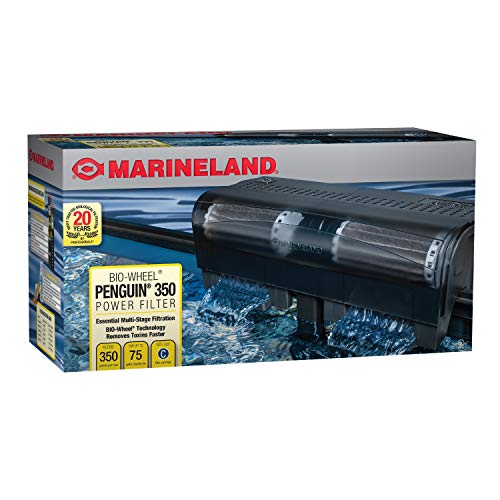
The Penguin Bio-Wheel uses patented rotating Bio-Wheel technology to deliver wet/dry biological filtration, complemented by multi-stage filtration that combines mechanical, chemical, and biological processes. This design supports a clean aquatic environment and compatibility with a range of small-to-mid sized saltwater tanks. Marineland’s filtration approach emphasizes reliable filtration performance and brand-backed reliability for hobbyists seeking straightforward maintenance in marine systems.
TARARIUM Turtle Tank Filter 20-75 Gal

Designed for larger enclosures, this internal filter supports three filtration stages. Stage 1 catches debris with a dense, double-sided mesh sponge, Stage 3 uses ceramic bio-balls to provide surface area for beneficial bacteria, and adjustable flow helps tailor circulation to tank needs. While marketed toward mixed-use tanks, this model offers robust filtration for saltwater setups requiring strong mechanical and biological filtration in one compact unit.
PONDFORSE 265GPH Canister Filter

The PondForse canister filter uses multiple media layers to remove particles and impurities, delivering crystal-clear water and a healthy ecosystem. It includes an adjustable flow rate for fitting various tank sizes and types and an energy-efficient 10W motor capable of circulating up to 265 US gallons per hour. This setup provides versatile mechanical, biological, and, with suitable media, chemical filtration for saltwater tanks.
Aqueon SmartClean Power Filter

SmartClean combines easy partial-water-change capability with quiet operation and a NoDrip design to minimize mess during filter service. It offers adjustable flow for compatibility with large-saltwater systems, and a cartridge/holster setup designed to simplify maintenance. This option is suited for hobbyists who want straightforward upkeep without sacrificing filtration performance in 50-90 gallon tanks.
BlueYu 4-in-1 Internal Filter

This 4-in-1 internal filter combines filtration, oxygenation, circulation, and a quiet pump. With a maximum flow around 200 GPH for 15-40 gallon tanks, it promotes stable water conditions and improved gas exchange—beneficial for a mixed reef or fish-only saltwater system. Its compact size makes it suitable for space-constrained setups while maintaining marine filtration efficiency.
Tararium Large Hang-On Back Filter

This 264 GPH hang-on-back model provides a multi-stage filtration sweep with a dedicated large UV chamber designed to address odors and green water tendencies in marine setups. It functions as a surface skimmer and supports adjustable flow, making it flexible for various saltwater tanks. The UV chamber helps reduce algae-related odor and cloudiness when used as part of a broader filtration strategy.
Buying Guide: Key Purchase Considerations
- Tank size and bioload: Match filtration capacity to your aquarium’s volume and the number of fish and invertebrates. Canister filters generally excel in larger tanks, while hang-on backs are convenient for mid-sized setups.
- Filtration stages: A balanced system combines mechanical, biological, and, where possible, chemical filtration. Biological media (e.g., bio-balls, ceramic media) support nitrification and ammonia processing crucial for saltwater tanks.
- Filtration flow and noise: Consider adjustable flow to protect delicate coral and invertebrates while maintaining adequate circulation. Quieter operation is important for living spaces.
- Maintenance and media access: Look for easy media replacement and accessible ports for cleaning. Reducing maintenance complexity helps sustain consistent water quality.
- UV and odor control: UV chambers can reduce algae and odors, particularly in tanks prone to green water or persistent blooms. Use UV features in combination with regular water changes.
- Energy efficiency: Energy-efficient models reduce long-term operating costs, especially for larger or heavily filtered systems.
- Compatibility with marine life: Some filters are better suited for reef environments; ensure media types and flow rates align with your specific saltwater inhabitants.
- Brand and support: Reputable brands with readily available replacement media and parts simplify ongoing maintenance and repairs.
When selecting a filter for a saltwater aquarium, prioritize models that offer reliable biological filtration, easy maintenance, and scalable flow. For reef keepers, stability and low nuisance algae are typical goals, while fish-only systems may emphasize mechanical filtration and robust water turnover. Consider a hybrid approach—combining a primary filter with supplementary media or a UV option—to achieve clear, stable water over time.