Choosing the right test kit is essential for maintaining stable salinity, pH, and nutrient levels in a saltwater aquarium. This guide highlights top options that help monitor ammonia, nitrite, nitrate, calcium, and more—keeping coral and fish healthy. Each kit below is designed for reliable lab-like results at home, with easy-to-read indicators and practical guidance for routine testing.
The following table summarizes five saltwater-focused test kits featured in this article, including what they test, typical uses, and what’s included in each package. This quick reference helps compare capabilities at a glance and decide which kit fits your reef setup.
| Product | What It Tests | Key Inclusions | Ideal For |
|---|---|---|---|
| API Saltwater Master Test Kit 550 | High range pH, ammonia, nitrite, nitrate | 6 bottles testing solution, 1 color card, 4 test tubes with caps | Comprehensive saltwater monitoring for daily to weekly testing |
| API Reef Master Test Kit | Calcium, carbonate hardness, phosphate, nitrate | 7 bottles solution, 2 color cards, 4 test tubes with caps | Reef tanks needing calcium and phosphate tracking |
| DIPSTIK 7-Way Test Strips | Nitrate, nitrite, general hardness, pH, carbonate, total alkalinity, total chlorine | 100 strips; quick dip-read results | Quick screening for both freshwater and saltwater tanks |
| API Freshwater Master Test Kit 800 | pH, high-range pH, ammonia, nitrite, nitrate | 7 bottles, color card, 4 tubes | Not saltwater-only, but useful for mixed setups |
| API 5-In-1 Test Strips | pH, nitrite, nitrate, carbonate, general hardness | 100-strips | Versatile for freshwater and saltwater tanks |
API Saltwater Master Test Kit 550-Test
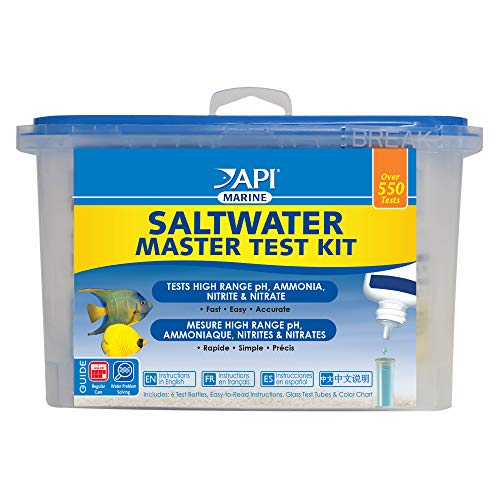
The API Saltwater Master Test Kit is designed to monitor four core parameters critical to saltwater environments: high-range pH, ammonia, nitrite, and nitrate. It includes six bottles of testing solution, a color card, and four test tubes with caps to simplify batch testing. This kit helps prevent invisible water problems that can harm fish and lead to losses, providing reliable data for routine maintenance and water changes.
API Reef Master Test Kit
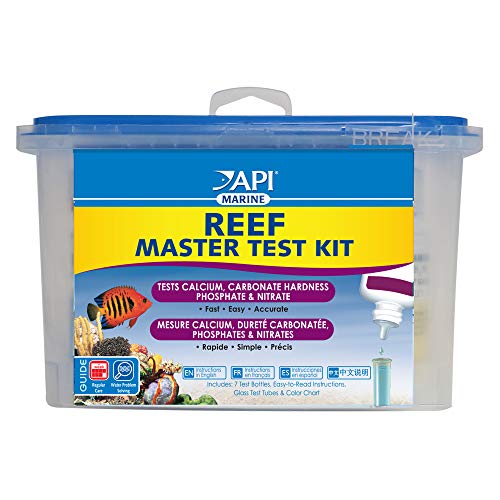
Designed for reef tanks, the Reef Master Test Kit measures calcium, carbonate hardness, phosphate, and nitrate. With seven bottles of testing solution and two color cards, it provides essential readings for maintaining calcium balance and reef stability, helping aquarists manage coral growth and water chemistry more effectively.
DIPSTIK 7-Way Test Strips

These test strips offer a 7-parameter screening in a quick, dip-and-read format. They measure nitrate, nitrite, general hardness, pH, carbonate, total alkalinity, and total chlorine. Dip one strip, wait for color changes, and compare against the chart. They provide fast, broad coverage suitable for hobbyists who want routine checks without a kit-heavy workflow.
API Freshwater Master Test Kit 800

Although primarily targeted at freshwater, this Master Test Kit tests five key parameters: pH, high-range pH, ammonia, nitrite, and nitrate. It is a robust option for mixed or transitional setups where freshwater and saltwater species may share equipment or require periodic cross-checks, ensuring continuity in water quality monitoring.
API 5-In-1 Test Strips

These 5-in-1 strips monitor pH, nitrite, nitrate, carbonate, and general hardness. They are a practical option for quick, everyday checks in both freshwater and saltwater setups. The strips are noted for straightforward color comparison and simple interpretation, helping users track water quality with minimal complication.
AAwipes 8-in-1 Aquarium Test Kit
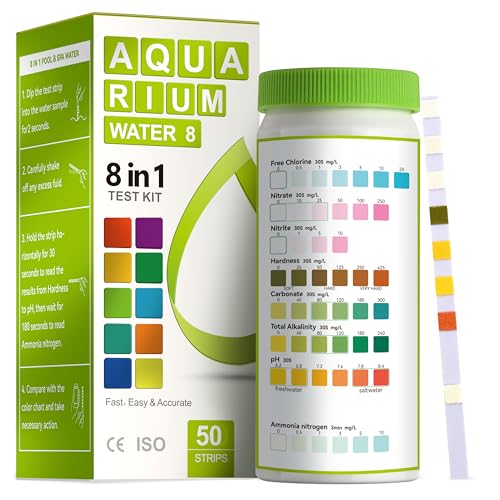
AAwipes offers an 8-in-1 testing kit with comprehensive coverage for saltwater and freshwater environments. It tests Free Chlorine, Nitrate, Nitrite, Hardness, Carbonate, Total Alkalinity, pH, and Ammonia. The kit emphasizes fast, accurate results in minutes and is designed for versatile use across various aquarium setups, including ponds and shrimp tanks.
API Ammonia 130-Test Kit
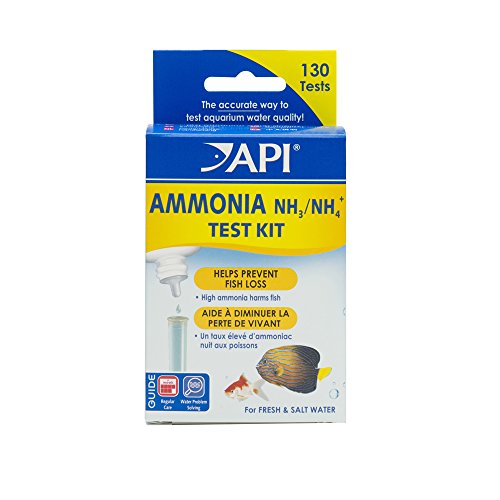
The Ammonia 130-Test Kit focuses on ammonia levels in freshwater and saltwater tanks, providing a precise readout from 0 to 8 ppm. This targeted kit helps aquarists monitor and adjust ammonia to prevent toxic spikes that can harm fish, especially in new setups or heavily stocked tanks.
Buying Guide: Saltwater Test Kit Considerations
- Coverage: Saltwater tanks often require calcium, alkalinity, and phosphate tracking in addition to ammonia, nitrite, and nitrate. Reef tanks benefit from tests for calcium and carbonate hardness, so reef-specific kits can be advantageous.
- Ease of use: Look for kits with clear color charts, straightforward instructions, and minimal steps. Test strips provide speed, while liquid reagent kits typically offer more precise readings.
- Accuracy and repeatability: Lab-grade accuracy is less common in home kits. Choose products with consistent results across lots and recommended testing frequency that matches your bioload and maintenance routine.
- Parameters vs. goals: Hobbyists keeping corals often target calcium, alkalinity, and magnesium in addition to standard ammonia/nitrite/nitrate checks. Select kits that align with your tank’s needs.
- Cost per test: Consider the long-term cost, including solutions, color cards, and replacement strips. Some kits become more economical with regular use, while others are best for occasional checks.
- Compatibility with reef systems: For reef tanks, choosing tests that address phosphate management and calcium balance helps support coral health and growth.
- Maintenance routine: A practical approach blends quick screens (strips) for frequent checks with more detailed liquid tests when parameters drift or after water changes.
In summary, reliable saltwater testing combines accuracy, ease of use, and coverage that matches your aquarium’s needs. For reef tanks, prioritize calcium, carbonate hardness, phosphate, nitrate, and pH balance alongside ammonia and nitrite tracking. For mixed or general saltwater setups, a mix of master test kits and targeted strips can offer a balanced workflow, ensuring you keep water chemistry within safe ranges for fish and corals alike.