Maintaining appropriate water hardness is essential for the health and vitality of many freshwater and shrimp tanks. When GH or KH are too high, it can stress fish, affect osmoregulation, and hinder plant growth. This article highlights practical products designed to lower or manage hardness, along with testing tools and a clear buying guide to help you make informed decisions for your setup.
| Product | Brand | Primary Use |
|---|---|---|
| Florin pH- | Brightwell Aquatics | Lowers pH and carbonate hardness in fresh, planted, and marine aquariums |
| Water Softener Pillow | CORISRX | Softens water by reducing hardness in freshwater tanks |
| Hardness Test Kit | ColorKiM | Quickly measures total water hardness for monitoring adjustments |
| Test Strips (All-in-One) | Aqueon | Broad parameter checks including hardness for freshwater and saltwater tanks |
| KH/GH Mineral Supplement | Brightwell Aquatics | Balances KH and GH when using RO/DI water with minerals |
Brightwell Florin pH- Water Conditioner

Florin pH- offers a safe method to gradually lower both pH and carbonate hardness in freshwater, planted, and marine tanks. By reducing alkalinity, you can approach more acidic water conditions that mirror certain biotopes or seasonal changes. This gradual approach helps minimize stress during water chemistry adjustments and supports species that prefer softer, acidic environments. Use it when establishing biotope tanks or encouraging spawning in fish adapted to low-pH habitats. The product is designed for controlled dosing and compatibility with a variety of water sources, aiding general stability when combined with appropriate filtration and plant management.
Continuum Flora Viv GH+
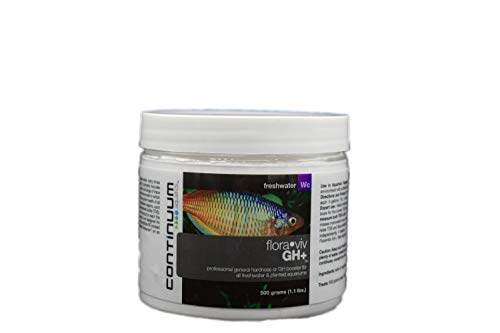
While primarily a general hardness booster, Flora Viv GH+ helps manage long-term mineral balance in planted tanks. For aquarists seeking to avoid excessive GH spikes, using this product in precisely dosed amounts can help maintain a stable baseline when combined with careful monitoring. This is particularly useful in systems that rely on softened water or RO/DI inputs where minerals may be scarce. Regular testing of GH and TDS supports a consistent environment for both fish and plant life.
ColorKiM AQUAX Hard Water Test Kit

This easy-to-use test kit helps determine water hardness quickly with a straightforward drop-and-read method. It provides reliable results in seconds, which is essential when adjusting domestic or aquarium water to safer levels for sensitive species. The kit includes enough drops for multiple tests, enabling regular monitoring as you modify water hardness through dilution, remineralization, or softening approaches.
Aqueon 7-in-1 Test Strips

For ongoing monitoring, Aqueon’s 7-in-1 strips offer a quick snapshot of crucial water parameters, including hardness. This enables rapid checks during water changes or when adjusting KH/GH targets. While strips are less precise than laboratory tests, they provide a practical first-line tool for detecting shifts in water quality that could indicate overly hard conditions or the need for further treatment.
Brightwell NeoTiger KH+/GH+ Mineral Supplement

NeoTiger KH+/GH+ is designed to balance hardness in RO/DI water by replenishing essential minerals like calcium, magnesium, potassium, and sodium. While its primary role is to restore mineral content, it can be used strategically in systems where soft water needs stabilization without compromising plant health or shrimp osmoregulation. Regular testing will help determine the appropriate dosing to maintain stable KH and GH levels conducive to the target species.
Buying Guide: Key Purchase Considerations
Choosing products to manage hardness involves understanding your tank’s requirements and the chemistry of your water source. Consider these perspectives when selecting gear and additives:
- Tank type and inhabitants: Fish species, invertebrates, and plants each have preferred KH/GH ranges. Biotope tanks or shrimp-focused setups often require softer water. Always tailor products to the target biotope.
- Water source and stability: If you use tap water with high hardness, a gradual approach with pH/KH adjustment is safer than abrupt changes. RO/DI water may need minerals to achieve a balanced state for life support.
- Testing accuracy and frequency: For precise control, rely on both reliable test kits and periodic strip checks. A combination of Total Hardness (GH) tests and pH monitoring provides a fuller picture of water chemistry changes.
- Product compatibility and dosing: Start with the lowest effective dose and adjust incrementally. Some products act by lowering alkalinity, others by buffering minerals. Read labels for compatibility with plants and sensitive species.
- Long-term maintenance: Hardness management isn’t a single action. Regular water changes, balanced fertilization, and compatible substrates can complement additive products for stable tanks.
Practical care paths and comparisons
For a low-stress approach, combine a gradual hardness-reduction product like Florin pH- with a reliable test kit to monitor changes. If you’re starting with very hard water, consider softening methods (e.g., a water softener pillow) in combination with careful KH/GH balancing. Test strips provide fast checks, while dedicated hardness test kits offer more precise readings when fine-tuning dosing.
Different aquarists prefer different strategies. Some opt for mineral supplements to maintain stable KH/GH in RO/DI water without risking nutrient deficiencies, especially in planted tanks. Others rely on aquarium-specific pH and hardness conditioners to replicate natural environments. The best choice aligns with your species’ needs, your water source, and your willingness to monitor chemistry regularly.
In all cases, a measured, data-driven approach reduces the risk of stress or harm to tank inhabitants. By using targeted products for hardness reduction or stabilization, paired with dependable testing, you can achieve healthier water conditions and a more resilient aquarium ecosystem.