Maintaining stable pH levels is essential for a thriving aquarium. This guide highlights reliable pH testing kits and pH adjustment tools that help keep freshwater tanks safe for fish and plants. Below you’ll find a quick summary of top picks, followed by in-depth product sections and a practical buying guide to tailor choices to your setup.
| Product | Brand | Key Benefit | Type |
|---|---|---|---|
| API pH Test & Adjuster Kit | API | All-in-one pH testing and adjustment with pH UP/DOWN | Test Kit & Adjuster |
| API PROPER pH 7.0 Freshwater Stabilizer | API | Stabilizes pH to neutral for consistent color and health | Stabilizer |
| API pH UP Freshwater Solution | API | Rises pH safely without promoting algae growth | pH Up |
| API pH DOWN Freshwater Solution | API | Lowers pH safely and fish-friendly | pH Down |
| AAwipes 8-in-1 Aquarium Test Kit | AAwipes | Comprehensive water testing for multiple parameters | 8-in-1 Test Kit |
Note: Each product targets common aquarium water challenges—monitoring pH, adjusting when needed, and verifying overall water quality to reduce stress and promote healthy fish and plant life.
API pH Test & Adjuster Kit: 250 Tests
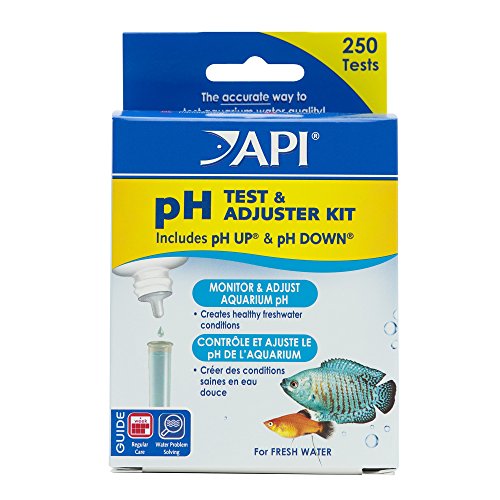
The API pH Test & Adjuster Kit provides a complete solution for monitoring and adjusting aquarium pH. Included are a testing solution, pH adjustments (UP and DOWN), a color card, and a test tube with cap. This kit covers a standard pH range of 6.0 to 7.6, enabling hobbyists to detect subtle shifts before they affect inhabitants. The design emphasizes clarity and repeatable results, helping keep fish comfortable during routine changes. The kit is intended for freshwater use and pairs well with routine testing to prevent water quality issues from going unnoticed.
Why it matters: Regular pH checks paired with timely adjustments help prevent stress, which can compromise immune responses in fish. For tanks with live plants or buffered substrates, precise control over pH levels can support better coloration and health in fish that prefer neutral conditions. The kit’s UP/DOWN solutions facilitate quick, measured adjustments, reducing guesswork.
API PROPER pH 7.0 Freshwater Stabilizer
API PROPER pH 7.0 is designed to stabilize freshwater aquarium water at neutral pH. By maintaining stable pH, it helps reduce stress on fish and supports vibrant coloration. This product is not a test kit but a stabilization agent that complements testing routines, especially in systems with soft water or driftwood that can lower pH over time. Regular use, alongside routine testing, can minimize pH fluctuations that stress fish and disrupt biological filtration.
Key considerations: pH stability is influenced by source water and additives like carbonates. For tanks housing sensitive species, using a neutral pH stabilizer reduces the risk of sudden shifts after water changes. It’s important to follow recommended dosing schedules and re-test after adjustments to confirm sustained levels.
API pH UP Freshwater pH Raising Solution
API pH UP is a phosphate-free solution for raising pH in freshwater aquariums. It’s formulated to provide predictable pH increases without promoting unwanted algae growth. This product is particularly useful when using soft or acidic tap water, or when buffering capacity is reduced. Pair it with routine pH testing to arrive at a stable, fish-friendly level that supports overall tank health and organism vitality.
Practical use: Always add pH UP gradually and re-test before adding more. Avoid large, rapid shifts in pH, which can shock fish. For planted tanks, consider how higher pH interacts with nutrient availability and plant growth to maintain balanced conditions.
API pH DOWN Freshwater pH Reducing Solution
API pH DOWN provides a safe means to reduce pH in freshwater aquariums. It’s formulated to lower pH without encouraging harmful byproducts or algal blooms when used as directed. This solution is useful in setups with fish that prefer more neutral to slightly acidic water or to counterbalance hardness or buffering levels that push pH above target ranges. Regular testing is recommended to avoid overshooting the desired pH level.
Best practices: Apply small adjustments, re-test after a short interval, and adjust gradually to avoid stress. Consider aquarium inhabitants’ tolerances and whether plants or substrate are influencing pH, adjusting as needed to maintain a stable environment.
AAwipes 8-in-1 Aquarium Test Kit

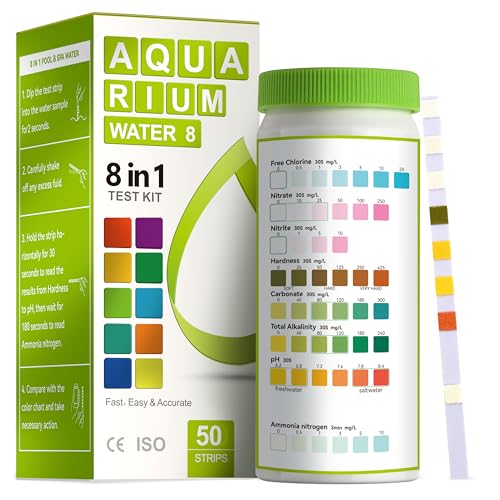
AAwipes 8-in-1 Aquarium Test Kit is a comprehensive option for monitoring water quality. The strips assess key parameters such as Free Chlorine, Nitrate, Nitrite, Hardness, Carbonate, Total Alkalinity, pH, and Ammonia nitrogen. The kit is designed for both freshwater and pond environments, offering rapid results in just minutes. The color-moding system is intended to be easy to interpret, aiding quick decision-making for maintenance and filtration checks.
Usage tips: Dip, wait, and compare against the color chart as directed. For best reliability, test water at least twice weekly in active tanks or after water changes. Use in conjunction with a reliable filtration system and a consistent maintenance routine to keep fluctuations to a minimum.
Buying Guide: Key Purchase Considerations For pH Management In Aquariums
- Testing method: Choose test kits that match your experience level. Strips offer quick checks, while liquid test kits or digital readers may provide higher precision for pH and alkalinity.
- pH range and accuracy: Not all kits cover the same pH span. Ensure the kit supports your target pH range and provides clear color or digital readouts for reliable interpretation.
- Adjustment strategy: If your goal is to maintain stable pH, pair a test kit with a suitable pH stabilizer or pH up/down solutions. For planted tanks, consider how substrate and minerals influence pH and buffering capacity.
- Frequency of testing: New tanks or systems with dynamic water chemistry benefit from more frequent testing (2–3 times weekly). Mature systems may need less frequent checks, but regular monitoring remains important.
- Water source considerations: Tap water, RO/DI water, and remineralized water all affect pH differently. Plan adjustments based on your source water’s baseline pH and hardness.
- Fish and plant compatibility: Stress from pH fluctuations is a common issue. Research the ideal pH range for your species and ensure adjustments align with plant needs if you have live plants.
- Maintenance integration: Use a simple log to track pH readings, adjustments, and changes in filter media or substrate. Consistency over time supports healthier aquariums.
- Safety and safety margins: Avoid large, rapid pH changes. Small, incremental adjustments with re-testing minimize shock to fish and improve long-term stability.
Across these options, the best approach combines reliable testing with careful, gradual adjustments. Selecting a kit that aligns with your tank size, inhabitants, and water source—paired with a stable maintenance routine—helps ensure clearer water, healthier fish, and more predictable tank chemistry.