Lava stones add natural texture, porous surfaces for bio-filtration, and visual depth to freshwater and shrimp tanks. This guide reviews top lava stone options that are aquarium-safe, durable, and easy to care for. Below you’ll find five picks with details on size, porosity, and landscaping potential to help you craft a natural-looking underwater landscape.
| Product | Brand | Size / Pack | Use Case |
|---|---|---|---|
| KINGRUI Black Lava Rock (4″-6″) | KINGRUI | 5 lb, 3 pieces | Aquascaping, caves, riverbeds |
| Tfwadmx 10 Pack Black Lava Rock | Tfwadmx | 1.18″ – 1.96″ each | Multiple display pieces for varied layouts |
| LANDEN Black Lava Stones (16 lbs) | LANDEN | 3″ – 10″ sizes, 11 pcs | Large landscapes, caves, cliffs |
| KINGRUI Black Lava Rock (4″-7″) | KINGRUI | 8 lb, 5 pcs | Natural aquascapes, planted tanks |
| LANDEN Icelandic Lava Stone (18 lbs) | LANDEN | 3″ – 11″ sizes, 11 pcs | Complex structures, high porosity for bio-filtration |
KingRui Black Lava Rock 4″-6″ For Aquariums

100% natural volcanic lava rock with a porous texture. The material is safe for aquariums and decorative landscaping, providing durable structure for caves and riverbeds. Its porous surface promotes natural bio-filtration and water circulation, helping maintain stable pH and clearer water. Ideal for freshwater, shrimp, and betta tanks, enabling natural aquascapes that enhance visual appeal.
Tfwadmx Black Lava Rock 1.18″-1.96″ (10 Pack)

This set includes ten volcanic pumice stones with varied shapes and textures. Each piece is hand-picked with unique features suitable for aquariums, terrariums, or fish tanks. The stones enhance natural-looking landscapes and can be used to create micro-caves or decorative rock piles. They are versatile for placing around plants and can double as simple planting surfaces or substrate accents.
LANDEN Black Lava Stones 3″-10″ (16 lbs)
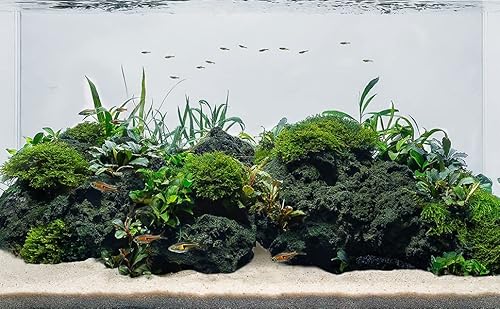
These volcanic stones are natural, richly porous, and dark-colored, designed for large aquascapes, paludariums, and terrariums. Their rough texture supports plant roots and encourages moss growth, while the stones’ light weight allows creating sizable landscapes. They also provide effective surface area for beneficial bacteria in filter media and biological carriers.
KingRui Black Lava Rock 4″-7″ For Aquariums

This variation provides 4-7 inch stones in a compact set of five pieces. The lava stones offer robust porous surfaces for natural filtration and pH stability. They are well-suited for creating larger rock formations, caves, and elevated landscape features within freshwater tanks and planted aquariums, delivering a striking natural aesthetic.
LANDEN Red Lava Stones 3″-10″

Red lava stones add color contrast to landscapes, pairing naturally with branches, mosses, and aquatic plants. The stones’ porous texture supports plant rooting and moss attachment, while their varied shapes help craft dynamic isagumi-style layouts or naturalistic riverbeds in planted tanks or terrariums.
Buying Guide: Lava Stone For Aquariums
Key considerations when selecting lava stones for aquariums include size, porosity, surface texture, and compatibility with aquatic life. Porous surfaces promote beneficial bacteria, aiding bio-filtration and water clarity. A mix of sizes helps create depth, caves, and layered landscapes. Lighter Icelandic lava stones are easier to stack into large structures, while solid, darker lava stones provide strong visual anchors. For planted tanks, plan one or two larger focal rocks with multiple smaller stones to craft a natural hillside or riverbed. Always rinse stones before introduction to remove dust.
Durability and safety are essential. Lava rock is typically inert and aquariums-safe, but inspect for dust or loose fragments before placing in water. Avoid stones with sharp edges that could injure fish or shrimp. Stone color can influence overall contrast—black or dark lava stones often look dramatic against green plants and vivid fish colors. In shrimp tanks, ensure stones do not have jagged crevices that could trap waste; smooth, rounded edges are preferable for easy cleaning. For bio-filtration, incorporate stones with intricate porosity to host beneficial bacteria while maintaining water movement.
Maintenance considerations include routine cleaning and monitoring for any unwanted algae growth. Stones do not require coatings or sealants; their natural porous surfaces are part of their filtration role. If you’re building a large landscape, consider mixing lava stones with driftwood or moss to create a balanced, nature-inspired aquarium environment. For terrariums or paludariums, lava stones can extend plant-root anchoring and offer visual contrast that mimics volcanic terrain.