Aquaponics blends fish keeping with hydroponic plant care in a compact, self-sustaining system. The following options emphasize larger, more capable setups suitable for home use, combining visible fish habitats with on-top plant growth. Each entry highlights how the fish tank and hydroponic elements interact to create a thriving, low-maintenance ecosystem. The selections span built-in aquaponic kits and modular planter systems that maximize space, ease of use, and educational value for all ages.
Summary of selected products:
| Product | Brand | Capacity (approx.) | Type | Key Benefit |
|---|---|---|---|---|
| Marineland Portrait Glass LED Aquarium Kit | MarineLand | 5 Gallons | All-in-one aquarium with integrated filtration | Clear viewing with lighting options |
| Back to the Roots Indoor Aquaponic Garden | Back to the Roots | 3 Gallons | Aquaponic water garden on top | Self-cleaning fish tank and edible greens |
| Penn-Plax Aquaponic Planter and Aquarium (Betta) | Penn-Plax | ~1.4 Gallons | Aquaponic planter integrated with tank | Compact, versatile for herbs and fish |
| Penn-Plax APON1 Aquaponic Planter (Betta) | Penn-Plax | ~0.5 Gallon | Small aqua-ponic planter tank | Low-maintenance starter option |
| Zu or Zaborik Fish Bowl with Plant Propagation | Zaborik | 0.6 Gallons | Glass bowl with plant habitat | Elegant, compact hydroponic setup |
Back to the Roots Indoor Aquaponic Garden

The Back to the Roots Water Garden Duo combines a compact fish tank with a top-mounted growing medium, enabling a year-round microgreen or herb garden. The system uses fish waste as fertilizer for the plants above, while the plants help filter and clean the water. This approach minimizes maintenance and provides a hands-on learning opportunity about nutrient cycles and ecological balance. The included STEM curriculum adds an educational dimension for families and classrooms. Suitable for small apartments, it offers a visually appealing, self-contained aquaponic experience that doubles as decor and a conversation piece.
Huamuyu Hydroponic Garden Aquaponic System
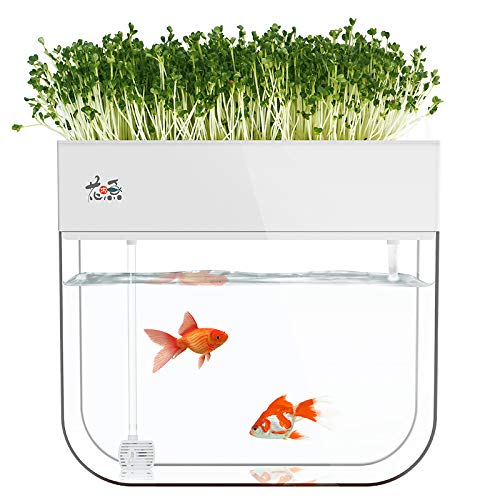
This self-cleaning system leverages fish waste as fertilizer for plant growth, reducing the frequency of water changes. The design emphasizes a continuous loop where plant roots access oxygen and nutrients while contributing to water purification. With subtler water level fluctuations and a built-in mechanism that minimizes cleaning, it is well-suited for users seeking a low-maintenance, education-friendly setup that demonstrates nutrient cycles in a compact footprint.
Penn-Plax Aquaponic Planter and Betta Tank

This Aqua-Ponic Tank combines a betta-friendly fish habitat with a plant planter that supports hydroponic growth. It mirrors a natural metabolic cycle where plant roots benefit from nutrient-rich water while providing a visual and educational display. The system accommodates common aquatic plants and kitchen herbs, offering a balanced environment that emphasizes the symbiotic relationship between aquatic life and plant life in a compact package.
Penn-Plax APON1 Aquaponic Planter and Betta Tank
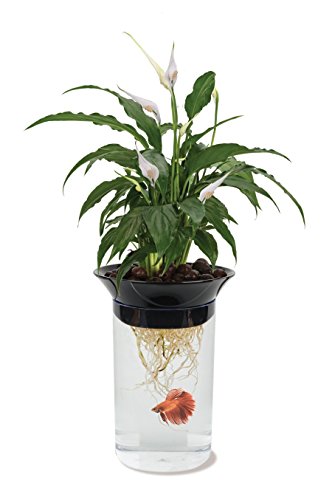
The APON1 offers another compact option for a fish-friendly, plant-growing setup. Ideal for beginners, it emphasizes ease of use with clear visibility, straightforward maintenance, and the capacity to host herb or leafy greens on top of the tank. Users can observe plant roots taking up nutrients as fish waste feeds plant growth, creating an accessible entry point into sustainable aquaponics in a small space.
Zaborik Fish Bowl With Plant Propagation Station

This glass fish bowl doubles as a plant propagation station, featuring a natural-looking bamboo stand and a cork lid. It offers a compact yet elegant way to house a single betta and to propagate aquatic plants on the lid or in surrounding growth zones. The design prioritizes a small footprint with a visually pleasing aquaponic look, making it suitable for desks, shelves, or coffee tables where space is at a premium.
Buying Guide: Key Considerations for Large Aquaponics Tanks
- Tank size and growth potential: Larger systems support more stable biological filtration and more ambitious plant growth. Evaluate whether the tank size aligns with your space and maintenance preferences.
- Filtration and circulation: Look for integrated filters, oxygenation features, and water circulation that support both fish health and plant roots. Quiet operation is a plus for home environments.
- Plant-on-top design: Evaluate the ease of planting and harvesting on the upper grow area, including access to sunlight or artificial lighting and how plants are anchored to prevent roots from entering the fish area.
- Maintenance requirements: Consider how often you’ll need to check water quality, perform water changes, and prune plants. Self-cleaning concepts can reduce labor but may require occasional intervention.
- Educational value: Many kits include STEM resources or guided activities that help families and classrooms explore aquaponics, nutrient cycles, and ecosystem balance.
- Material and aesthetics: Transparent or clear viewing panels improve observation of the ecosystem. Durable plastics and glass that resist algae buildup are beneficial for long-term use.
- Compatibility with fish types: Some systems are optimized for bettas and similar small fish, while others can accommodate a wider range. Ensure the chosen setup matches your fish species.
- Expansion options: If you plan to scale, check whether the system supports additional grow beds, modular components, or compatible upgrades without extensive redesigns.
In selecting a large aquaponics tank, users should balance space, maintenance, and educational value with the desired aesthetic. The options above showcase a spectrum from all-in-one kits to compact planters that still deliver meaningful aquaponic interactions, allowing you to enjoy fish-plant symbiosis while enhancing home decor and learning opportunities.