Answering the most common question from aquarists: which gravel cleaner best fits your tank and routine? This guide highlights five reliable options suitable for freshwater setups and different cleaning needs. These cleaners are best for: hobbyists with small to mid-size tanks, owners who want easy manual siphoning, and those seeking electric or multifunction tools for faster water changes. The summary table below helps you compare at a glance.
| Product | Best For | Key Benefit |
|---|---|---|
| Tetra Water Cleaner Gravel Siphon | Small to medium tanks | Easy manual siphon for quick 30% water changes |
| QZQ Aquarium Gravel Cleaner | All-in-one cleaning on a budget | Mufti-functional, no electricity, safe design |
| AQQA Electric Gravel Cleaner | Hands-off cleaning | 6-in-1 functionality with strong flow |
| UPETTOOLS Aquarium Gravel Cleaner | Medium to large tanks | High flow, adjustable suction, versatile use |
| Laifoo 5ft-S Aquarium Siphon | Long tanks or deep substrates | Long hose, simple manual operation |
Tetra Water Cleaner Gravel Siphon for Aquariums
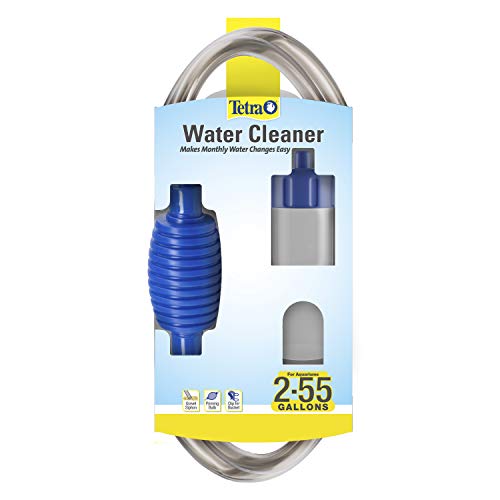
Brand: Tetra
- What it is: A gravel siphon designed to simplify pulling out dirty water while cleaning the substrate.
- Best for: Small to medium freshwater aquariums up to 55 gallons. Ideal for routine 30% water changes every 30 days.
- Why chosen: Simplicity and predictable performance for light to moderate maintenance routines.
Who it’s best for: Beginners and casual hobbyists who want an uncomplicated, manual cleaning tool without extra bells and whistles.
Caution: This is a siphon that relies on manual operation; ensure you hold the line steady to prevent accidental gravel suction or spillover.
QZQ Aquarium Gravel Cleaner [2026 Edition]
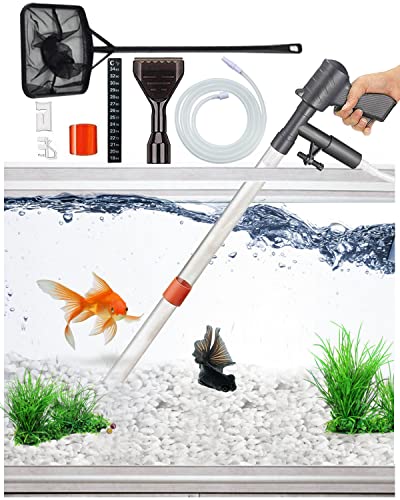
Brand: QZQ
- What it is: A multi-functional aquarium cleaner that combines gravel vacuuming, algae scraping, and water changing in one kit.
- Best for: Aquariums where you want a compact, manual tool capable of quick water changes and debris removal without electricity.
- Why chosen: The integrated design helps maintain substrate and water quality with minimal gear switching.
Who it’s best for: Fish keepers seeking an all-in-one manual cleaning solution and a safer alternative to powered devices.
Caution: The manual press design requires practice to achieve a steady flow and may require frequent stops to clear clogs from filter nets.
AQQA Electric Aquarium Gravel Cleaner

Brand: AQQA
- What it is: A 6-in-1 electric gravel cleaner that handles water changes, sand washing, debris cleaning, scrubbing, filtration, and water circulation.
- Best for: Fish rooms with higher maintenance needs or larger tanks that benefit from automated assistance.
- Why chosen: Strong 320 GPH flow supports faster maintenance and more thorough substrate cleaning.
Who it’s best for: Aquarists who want a comprehensive tool to reduce manual work and accelerate routine cleaning.
Caution: Ensure the device is fully submerged during operation to prevent air suction and loss of prime.
UPETTOOLS Aquarium Gravel Cleaner

Brand: UPETTOOLS
- What it is: Upgraded 6-in-1 gravel cleaner combining water changing, sand washing, debris removal, filtration, water showering, and flow control.
- Best for: A variety of tanks, including deeper or larger volumes, thanks to adjustable flow and high capacity.
- Why chosen: Notable for its high pump power (1700 L/H) and versatile duties within a single tool.
Who it’s best for: Keepers who want a robust, all-purpose cleaner that reduces the need for multiple gadgets.
Caution: The pump must remain fully submerged; running dry can damage the unit or reduce lifespan.
Laifoo 5ft-S Aquarium Siphon Vacuum Cleaner

Brand: Laifoo
- What it is: A long-hose siphon vacuum designed for siphoning waste and turbid water with minimal disturbance to fish.
- Best for: Taller tanks or setups requiring reach into deeper substrates and long hoses.
- Why chosen: The extended hose length provides flexibility for homes with larger or deeper aquariums.
Who it’s best for: Hobbyists with longer tanks or those who prefer manual cleaning with extended reach.
Caution: Loose connections can cause leaks; ensure all joints are secure before operation.
Buying Guide
- Tank size compatibility: For smaller tanks (≤20 gallons), manual siphons are usually sufficient. For larger tanks, consider 6-in-1 electric cleaners or longer-hose siphons.
- Maintenance needs: If you perform regular weekly maintenance, a simple siphon is enough. If you prefer less hands-on work, choose an electric or multi-function cleaner.
- Substrate type: Fine gravel and sand can clog siphons; look for built-in filters or screens to prevent fish from being sucked up.
- Power source: Manual siphons do not require electricity; electric cleaners provide speed but require water submersion and safety.
- Flow control: Adjustable flow helps protect delicate fish and plants and reduces substrate disturbance.
- Ease of use: Consider how easy it is to assemble, operate, and store the device, especially if you have a small living space.
FAQ
- What is the best gravel cleaner for beginners? A manual siphon like the Tetra model is typically easiest to start with due to its simple design and clear operation.
- Can I use gravel cleaners in saltwater tanks? Yes, most can operate in both freshwater and saltwater, but verify the product details for compatibility and any corrosion risks.
- Do these cleaners remove algae as well? Some kits include algae scraping functions, such as the QZQ model, which helps with substrate cleaning and surface maintenance.
- Is a pump necessary for cleaning? No, manual siphons work without a pump; electric cleaners automate parts of the process but require power and safety considerations.
- How often should I clean the substrate? Many hobbyists perform a light substrate clean during regular water changes; heavy detritus may require more frequent deep cleaning.
- What should I do to avoid fish injury? Use flow control and avoid strong suction near fish and plants; start with a gentle setting and observe.