Choosing the right epoxy for aquariums requires considering fish and invertebrate safety, water compatibility, and durability. This guide highlights five reputable, aquarium-safe epoxy options designed for bonding rocks, making patches, and creating secure seals without harming aquatic life. Each product is evaluated for freshwater and saltwater use, toxicity, and performance in typical aquarium environments.
| Product | Brand | Use Case | Water Type | Key Benefit |
|---|---|---|---|---|
| Instant Ocean HoldFast Epoxy Stick | Instant Ocean | Repairs, bonding decorations | Freshwater & Marine | Non-toxic; bonds rocks, corals, slate |
| A/B Epoxy Kit 96 Ounce | The Epoxy Experts, MAX EPOXY SYSTEMS | Coating, casting, sealing | Fresh or Salt Water | Low toxicity; strong, flexible bond |
| Avenuebool Epoxy Putty | Avenuebool | Fish-safe putty for aquascaping | Freshwater & Saltwater | Non-toxic; quick setting |
| SHORE RESIN 16 oz Epoxy | SHORE RESIN | Clear coatings, molds, repairs | Fresh or Salt Water | Crystal clear; UV resistant; bubble-free |
| Vivresina Epoxy Resin 1 Gallon | Vivresina | DIY art, jewelry, coatings | Fresh or Salt Water | Crystal clear; fast cure; high hardness |
The products above are selected for safety, practicality, and performance in aquariums. The list focuses on epoxies and epoxy-like putties known to be fish-friendly, with formulations suited for both freshwater and saltwater environments. Each entry links to its Amazon product page for convenient access to additional details and customer reviews.
Instant Ocean HoldFast Epoxy Stick
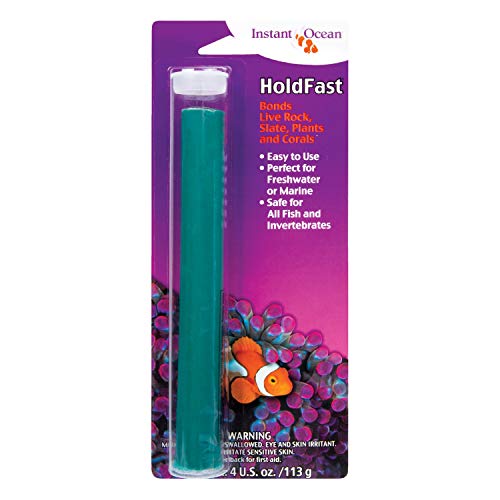
Instant Ocean HoldFast Epoxy Stick is described as a non-toxic epoxy safe for all fish and invertebrates. It’s suitable for both freshwater and marine aquariums, offering a simple solution for bonding rocks, corals, slate, and other aquarium features. The combination of safety and versatility makes it a popular option for quick repairs and secure fixes inside tanks, without introducing harmful substances into the water.
MAX ACR A/B Epoxy Kit 96 Ounce

The MAX ACR A/B epoxy system is marketed for bonding glass, steel, aluminum, concrete, ceramic, and fiberglass, with a formulation designed for both fresh and saltwater use. It emphasizes a balance of strength and flexibility and notes low toxicity with durable water resistance—important traits for maintaining tank safety and the integrity of repairs over time.
MAX ACR A/B 96 Ounce Kit

This kit from The Epoxy Experts extends the MAX ACR line with a focus on high water compatibility, including low toxicity and reduced chemical extractables after prolonged submersion. It supports coating, sealing, and fiberglassing tasks in aquaria, offering robust performance for larger or more demanding projects like plywood aquariums or koi ponds where a strong, lasting seal is essential.
Avenuebool Epoxy Putty

Avenuebool Epoxy Putty is designed specifically for aquariums, with a complete kit that includes gloves for handling. The putty is non-toxic, suitable for freshwater and seawater environments, and cures quickly—hardened in about 15 minutes and fully set in around 45 minutes. It’s positioned for reef rocks, coral attachments, and general aquascaping where fast, safe fixes are needed.
Vivresina Epoxy Resin 1 Gallon

Vivresina epoxy resin emphasizes a crystal-clear, UV-resistant formula with self-leveling and bubble-free characteristics. It cures relatively quickly and reaches a high surface hardness, making it well-suited for a range of DIY projects in aquariums—coatings, molds, and decorative pieces that require clarity and a durable finish while remaining compatible with aquatic life.
Buying Guide
When selecting epoxy for aquarium use, consider these factors to balance safety, performance, and practicality:
- Fish and invertebrate safety: Look for non-toxic formulations with explicit statements about suitability for aquariums and the absence of harmful volatiles or leachables.
- Water type compatibility: Ensure the product works in both freshwater and saltwater environments if you maintain diverse tanks or plan to switch types.
- Bonding and curing time: For quick projects, choose putties or epoxies with fast set times that still deliver a strong, durable bond after full cure.
- Clarity and aesthetics: If the epoxy will be visible, opt for crystal-clear resins with UV resistance to minimize yellowing and ensure long-term transparency.
- Gloss and hardness: Higher hardness (measured in D or similar) and a glossy finish are desirable for protective coatings and exposed repairs in tanks.
- Toxicity and extractables: Select products with low or no chemical extractables after immersion, particularly for species sensitive to water quality changes.
- Ease of use: Consider whether a putty, paste, or 1:1 resin system better suits your task, as well as whether you need an included glove set or application accessories.
- Application environment: Some epoxies have strong odor or require curing times influenced by ambient temperature and humidity; plan projects accordingly.
- Maintenance of water quality: Even with aquarium-safe products, ensure cure complete before returning the tank to full operation and monitor water parameters after use.
Performance Perspectives
- For quick field repairs in established tanks, putty options like Avenuebool provide rapid, fish-safe fixes with minimal equipment.
- For structural bonds and long-term seals, epoxy systems such as MAX ACR and related kits offer robust, durable performance under water exposure.
- Clear coatings from SHORE RESIN and Vivresina accommodate cosmetic enhancements and protective coatings where transparency and gloss are important.
- In reef or rockwork setups, non-toxic, reef-safe formulations reduce the risk of introducing contaminants during the curing phase.
These considerations help ensure that epoxy use in aquariums supports animal health, water quality, and the longevity of tank installations. Always read manufacturer guidelines for curing times, mixing ratios, and safety precautions before applying products inside or around aquatic systems.