Choosing the right CO2 solenoid valve setup is essential for stable, consistent carbon dioxide delivery in planted aquariums. This guide reviews five reliable options designed for different tank sizes and user needs, from compact desktop systems to full regulator kits. Each product combines a solid solenoid valve with compatible regulators, bubble counters, and check valves to prevent backflow. Read on to compare features, compatibility, and durability to find the best fit for your aquarium.
Summary Of Selected Products
| Product | Brand | Key Features |
|---|---|---|
| CO2 Solenoid Valve With Adapter | FZONE | Desktop system adapter, 100-240V input, 12V output |
| CO2 Regulator With Dual Gauge | Hygger CO2 | Aluminum body, dual gauges, 12V DC solenoid, bubble counter, check valve |
| Detachable CO2 Regulator With 12V DC Solenoid | Hygger CO2 | Detachable design, high-precision needle valve, side-outlet, bubble counter |
| DC Solenoid Regulator With Bubble Counter | FZONE | 12V DC, bubble counter, check valve, tools included |
| Inline CO2 Solenoid Valve Mini | Clscea | Low temperature, compact, energy-saving 12V |
FZONE CO2 Solenoid Valve With Adapter For Desktop Aquarium

The FZONE unit provides a compact valve and adapter suitable for a desktop setup. It lists an input range of 100-240V AC with a 12V 200mA output, designed to work with FZONE desktop CO2 systems and DIY kits. The combination supports safe, automatic CO2 control when paired with a timer or controller. This option is ideal for small tanks or beginner setups seeking a plug-and-play solenoid valve with compatible adapters. Robust build and straightforward installation help reduce setup friction for new aquarists.
Key considerations include compatibility with your CO2 equipment and electrical safety. The adapter emphasis means you’ll want to confirm the rest of your components align with 12V operation and that the electrical supply meets local standards. Users should ensure proper tubing sizes and airtight connections to prevent leaks. This valve works best when integrated into a complete CO2 system with a regulator and diffuser for stable plant growth.
Hygger CO2 Aquarium Regulator With Dual Gauge And 12V DC Solenoid

This Hygger regulator pairs a durable aluminum body with dual gauges for precise CO2 pressure and flow monitoring. The included 12V DC solenoid valve, along with a timed socket, enables automatic control of CO2 delivery—useful for consistent dosing without manual intervention. The regulator is designed for broad compatibility with common CGA320 connections and a wide range of CO2 atomizers or diffusers, making it suitable for many planted tanks. The upgraded bubble counter uses a thickened acrylic tube and includes a check valve to prevent backflow.
Considerations include the durability of the gauge readings and the overall reliability of the check valve in preventing contamination. While the unit aims for accuracy, it’s important to calibrate the bubble counter for your specific plant load and tank volume. Regular inspection of seals and connections helps maintain steady CO2 output and reduces gas leakage risks in larger or heavily planted tanks.
Hygger CO2 Regulator Detachable Design With 12V DC Solenoid
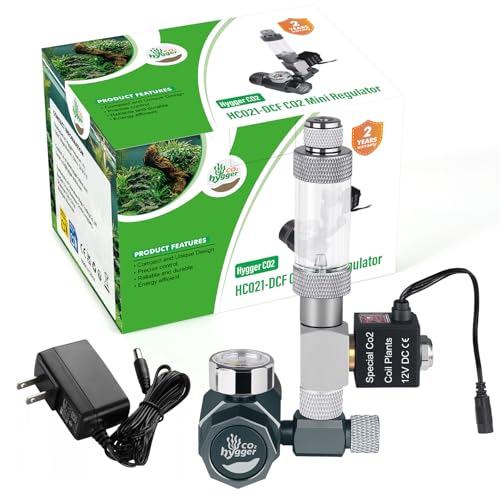
The Hygger detachable regulator emphasizes safety and quiet operation with a 12V DC solenoid and a precision needle valve for high-precision tuning—often achieving around 1 bubble every three seconds. It is designed for side-outlet CO2 systems and CGA320 compatibility on American tanks, reducing mismatch risks. A robust sealing approach minimizes leaks, and the side-outlet orientation aids in tidy tubing management in mid-to-large aquariums.
Purchase considerations include whether you need a detachable regulator for easier maintenance or space constraints. While the design supports reliable DIY or kit-based CO2 setups, users should verify compatibility with their specific CO2 bottle and diffuser. For tanks with denser aquatic plant populations, the tighter control offered by the needle valve helps maintain stable CO2 levels with minimal fluctuation.
FZONE Aquarium Co2 Regulator DC Solenoid With Bubble Counter

This FZONE unit updates to a DC solenoid design for safer operation and improved stability compared to early AC models. It features a high-precision fine-tuning needle valve to achieve a typical target such as 1 bubble per three seconds, and it includes a bubble counter with a check valve to prevent water backflow. The kit includes installation tools, making setup more straightforward for beginners and experienced hobbyists alike. A focus on precision helps maintain balanced CO2 dosing for vibrant plant growth.
Key considerations include the balance between output stability and the tank’s CO2 absorption rate. DC systems generally run cooler and quieter, which is desirable in home aquariums. Verify that the bubble counter and check valve are compatible with your diffuser and tubing sizes. For larger tanks or high-demand plant species, pairing with a compatible regulator and a properly sized diffuser is essential for consistent dosing.
VANZACK Co2 Solenoid Valve Aquarium Regulator

The VANZACK unit focuses on a compact design with a low-temperature magnetic solenoid valve suitable for fish tanks. It supports automatic CO2 flow control and aims to deliver a stable output without occupying excessive space. The valve’s construction emphasizes durability under typical aquarium conditions, helping maintain consistent gas delivery for healthy plant development. A small form factor makes this option ideal for nano tanks or setups where space is at a premium.
Considerations include maximizing efficiency in limited spaces and ensuring the entire CO2 chain—from bottle to diffuser—uses compatible components. For nano tanks, precise control is critical, as even small fluctuations can impact plant health. The low-temperature design helps reduce heat-related concerns, a benefit in sealed or densely planted aquariums. Always ensure the valve and tubing fit your CO2 system’s diameter and pressure requirements.
FZONE Aquarium CO2 Regulator Mini Series V3.0 Dual Stage
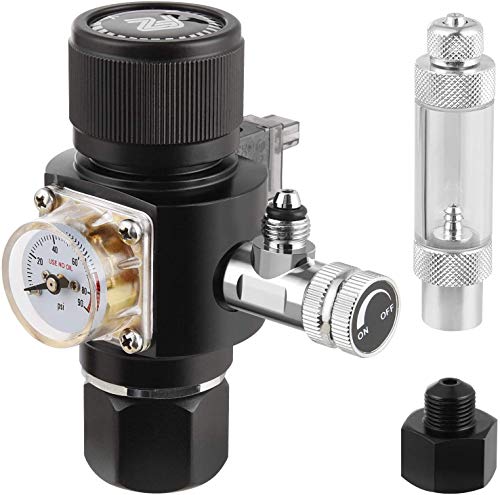
The FZONE Mini Series V3.0 offers a dual-stage decompression system with adjustable output pressure and a 12V DC solenoid. It uses a precision needle valve for fine CO2 tuning and includes a bubble counter with a check valve, plus installation tools. This design aims to deliver stable CO2 flow while reducing pressure fluctuations that can affect larger tanks. It’s well-suited for mid-sized to larger planted tanks that require consistent dosing with a compact regulator setup.
Buyers should compare this model against single-stage regulators when considering long-term CO2 stability. Dual-stage regulation can improve steadiness, especially in systems with high CO2 demand or unstable tank conditions. Ensure compatibility with your CO2 cylinder, diffuser, and aquarium dimensions to optimize performance and avoid unnecessary gas waste.
Buying Guide: Key Purchase Considerations And Comparisons
- Tank size and CO2 demand: Smaller tanks may do well with compact, DC-solenoid valves, while larger tanks often benefit from dual-stage regulators for stable output.
- Power and safety: DC solenoids generally run cooler and quieter than AC models. Verify voltage compatibility with your local power supply and ensure safe wiring practices.
- Compatibility: Ensure regulator, valve, and diffuser components fit standard CGA320 connections or other tank fittings you use. Check tubing diameters (commonly 4/6 mm) to prevent leaks.
- Bubble counter and check valve: A bubble counter helps you visualize dosing; a check valve prevents backflow that could contaminate the CO2 source or aquarium.
- Installation and maintenance: Look for units that include installation tools and easy-to-clean components. Regular inspection of seals and hoses prevents CO2 leaks and wasted gas.
- Precision tuning: A high-precision needle valve allows small, repeatable adjustments. This is important for stable, plant-friendly dosing as tanks mature.
- Budget and space: If space is limited, favor compact inline or desktop setups. For larger tanks, a robust regulator with multiple gauges provides better control.
- Durability and materials: Aluminum or corrosion-resistant materials extend life in humid aquarium environments. Verify that seals and hoses resist degradation over time.
- Safety and compliance: Choose products with cool-touch housings and low-voltage operation to minimize risk in home environments.
- Maintenance schedule: Plan regular checks of solenoids, valves, and bubble counters. Replace worn seals or tubing to maintain consistent CO2 delivery.
In summary, the best CO2 solenoid valve setup balances reliability, precision, and compatibility with your aquarium size and plant load. It’s advisable to choose a kit that includes a bubble counter and check valve for safety and visibility, with a regulator appropriate to the tank’s CO2 demand. For beginners, starting with a compact, DC-powered system and gradually upgrading as you assess plant growth and water chemistry can be a prudent approach. For advanced aquarists, evaluating dual-stage regulators and high-precision needle valves provides a robust platform for long-term stability and lush aquascapes.