Readers seeking effective biological filtration for freshwater and saltwater tanks will find ceramic rings to be a reliable choice. This article highlights five top ceramic ring filter media options, explaining who each is best for, how they work, and key limitations. The selections below are suitable for home aquariums, ponds, and canister systems, with practical notes to help you choose.
| Product | Best For |
|---|---|
| Sukh 3 Bags Ceramic Rings | Versatile all-round filtration for small to medium tanks |
| Fluval Pre-Filter Media Ceramic Rings | Pre-filtration and clog prevention |
| JIHAQUA Aquarium Bio Ceramic Rings 18 lbs | High-capacity biological filtration in larger setups |
| PULACO Aquarium Ceramic Ring | Natural, all-round filtration with pH stabilization |
| JIH Aquarium Bio Ceramic Rings 4 lbs | Compact, flexible media for smaller systems |
Sukh Ceramic Rings For Aquarium Filter
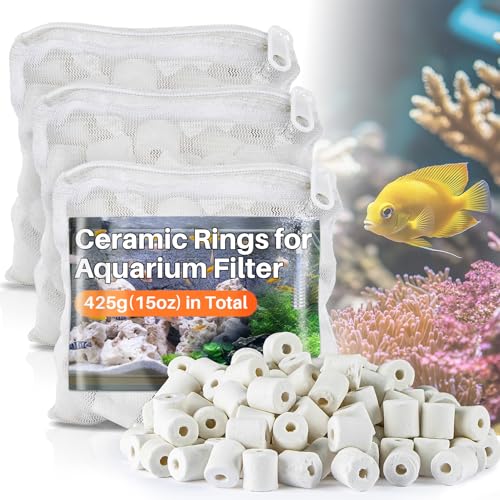
The Sukh ceramic rings come in three mesh bags and total 425g of bio ceramic media. The design features a hollow, porous structure that expands the filtration surface and promotes gentle, even water flow. Best for both freshwater and saltwater setups, these rings help physically trap debris while fostering beneficial bacteria growth. They are suited for canister, hang-on, and pond filters in home or professional environments. A key limitation is that performance depends on proper placement within the filter and regular maintenance to avoid clogging.
Fluval Pre-Filter Media With Ceramic Rings
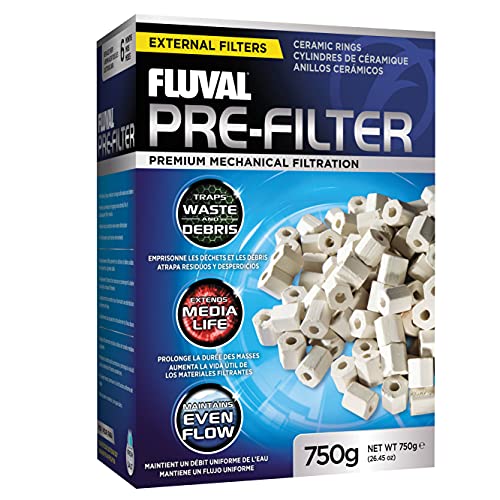
Fluval’s ceramic rings function as mechanical pre-filter media designed to prevent clogging and extend the life of downstream filter media. This product is appropriate for a range of Fluval canister and internal filters, helping maintain clearer water by reducing debris before it reaches biological media. Choose this option if you want a dedicated pre-filtration step. A trade-off is that it may require more frequent maintenance if placed as the initial stage in a high-flow system.
JIHAQUA Bio Ceramic Rings 18 Lbs

JIHAQUA’s 18-pound package provides a large amount of ceramic ring media, with each ring sized at 1/2″ x 1/2″ and distributed across 18 mesh bags. The porous design supports substantial contact time for beneficial bacteria in both fresh and saltwater tanks. This option is best for bigger setups that require substantial biological filtration capacity. It is less ideal for small, low-volume tanks due to its bulk and higher volume of media.
PULACO Aquarium Ceramic Ring Filter Media

PULACO ceramic rings are fired from high-temperature materials, featuring a bee-like microporous structure that provides a large surface area for bacteria. They’re designed to improve water quality by filtering impurities, stabilizing pH, and supporting beneficial bacteria across freshwater and saltwater tanks. They are an all-around option suitable for various filter configurations, including hanging and power filters. A limitation is that performance depends on adequate water flow through the media, so ensure your filter head and flow rate match the media size.
JIH Aquarium Bio Ceramic Rings 4 lbs

JIH’s 4-pound set provides compact bio ceramic rings designed for smaller canister or hang-on filters. The rings are sized at 1/2″ x 1/2″ and share a porous structure that supports efficient bacterial colonization. Best for small aquariums or as a supplemental biological media in larger systems. A potential limitation is that smaller volumes may require more frequent media changes or rinse cycles to maintain flow in high-demand systems.
Buying Guide
What should you consider before buying ceramic ring media?
- Tank size and filter type: Larger setups may benefit from higher-volume media like the 18 lb options, while small tanks can use compact rings.
- Porosity and surface area: More porous rings offer more surface for beneficial bacteria but require adequate water flow to avoid clogging.
- Freshwater vs. saltwater: Most ceramic rings work in both environments, but saltwater systems may need more frequent checks for flow and microbial balance.
- Flow rate and filter compatibility: Ensure the media fits your filter’s flow rate and basket size for optimal contact time and minimal bypass.
- Maintenance: Porous media needs periodic rinsing; avoid harsh scrubbing which can remove beneficial biofilm.
Practical buying tips
- Prefer media labeled for biological filtration when aiming to build beneficial bacteria colonies.
- Use a combination approach: ceramic rings for biological filtration plus mechanical media upstream to reduce debris.
- Keep backup media on hand for routine maintenance to minimize tank disruption.
FAQ
- What is ceramic ring media best for? It primarily serves as a substrate for beneficial bacteria to grow, supporting biological filtration in freshwater and saltwater tanks.
- Can ceramic rings clog a filter? Yes, if not maintained. Regular rinsing helps prevent buildup and maintains flow.
- Do ceramic rings affect pH? Generally, they do not dramatically alter pH, but some ceramic materials can have minor buffering effects in certain conditions.
- Which size should I choose? Larger volumes suit bigger tanks; smaller volumes suit compact setups or as supplemental media.
- Is it okay to mix brands? Yes, you can mix media types, but ensure compatibility with your filter and maintain proper flow paths to avoid bypass.
- How often should I replace ceramic rings? Ceramic rings are designed for long-term use, but monitor flow and water quality to determine when rinsing or replacement is needed.