Answering common buyer intent: if you need a reliable way to feed fish while you’re away, an automatic fish feeder is the right solution. These devices simplify schedules, prevent overfeeding, and reduce daily monitoring. The top models below are best for small to medium tanks, bowls, and even some turtles or koi setups. They suit vacation care, weekend trips, or busy workdays. The following sections highlight five strong options, with practical notes on who each feeder is best for and why they stand out.
Quick picks for quick decisions:
| Product | Best For | Key Benefit |
|---|---|---|
| Aoyar Automatic Fish Feeder (200ml) | Small tanks; busy owners | Three interval modes; large capacity; moisture-proof lid |
| FISHNOSH Automatic Fish Feeder (Blue) | Busy households; multi-day gaps | Up to 9 feedings per day; simple setup |
| Petbank Automatic Fish Feeder (Moisture-Proof) | Precision feeding; tight moisture control | 16 grids; two mounting methods |
| FISHNOSH Auto Feeder (ML) | Betta and small tanks | Three feedings per day; simple operation |
| FREESEA Auto Feeder | Vacation and travel | Three timers; 7–14 day supply |
Automatic Fish Feeder Dispenser for Aquarium: Large 200ml Capacity

This feeder offers three fixed feeding intervals: 8, 12, or 24 hours. It supports manual feeding for immediate needs and includes a 200ml capacity to cover longer trips. The moisture-proof lid helps keep flakes and pellets dry, reducing clumping. Best for small fish in compact tanks, where consistent timing matters to maintain health without daily adjustments.
Who it’s best for? Aquarists with small tanks and frequent travel who want simple, reliable programming. Why selected? The combination of a straightforward three-mode system, sizable capacity, and moisture control addresses common vacation feeding challenges. Caution: small fish may require more frequent feedings; adjust portions to avoid leftovers.
FISHNOSH Automatic Fish Feeder – New Generation 2026

This model supports up to 9 feedings per day and can be calibrated to 3 daily feedings with a three-round cup. It emphasizes ease of use with clear setup guidance, making it suitable for families or beginners. It’s well-suited for small tanks and bigger setups alike depending on the chosen feeding schedule.
Best for? Owners who need a predictable routine but also want the option to expand feeding times later. Why chosen? The higher feeding frequency option provides flexibility for varied species and daily routines. Limitation: absence of a display may require familiarity with the button controls to adjust settings quickly.
Petbank Automatic Fish Feeder – Moisture-Proof and Precise

With 16 grids, this feeder offers up to 15 meals and precise portioning. It provides two installation methods: clamp base or suction cup, accommodating different tank designs. A fully sealed opening reduces moisture ingress when not feeding, helping keep food dry. It’s compatible with various foods, including pellets and flakes, but note it’s not recommended for shrimp.
Best for? Aquarists who demand precise portioning and adaptable mounting. Why selected? The multiple grids improve feeding accuracy and variety, while moisture resistance reduces spoilage. Caution: not designed for all food forms like certain flakes; verify compatibility with your food type before use.
FISHNOSH Automatic Feeder – Model ML

Designed for stress-free feeding, this model supports up to three feedings per day with one round per feeding. It emphasizes user-friendly operation, including a clear refill path and a dedicated manual feed button for immediate needs. It’s a fit for betta fish or compact tanks where a simple timer is sufficient.
Best for? Betta owners and small-tank setups needing straightforward scheduling. Why selected? Simplicity and reliability for routine feeding. Limitation: no display screen; relies on intuitive button presses to adjust timing and portions.
FREESEA Automatic Fish Feeder – 3 Timers
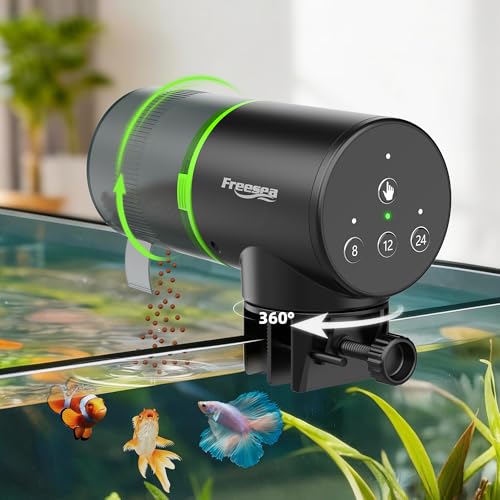
This feeder supports a 7–14 day supply with a 200ml dispenser and offers hands-free vacation feeding. It features three timers and universal tank compatibility, making it suitable for bettas, goldfish, koi, and turtle tanks. The design focuses on straightforward setup and consistent delivery across days away from home.
Best for? Travelers and families needing dependable, extended coverage between refills. Why selected? The combination of multi-day capacity and three timers makes it a versatile option for longer trips. Limitation: may require careful testing to dial in portions for larger feeds in bigger tanks.
Buying Guide: Key Considerations For Automatic Fish Feeders
What feeding schedule do you need? If you require simple daily cycles, choose models with 2–3 preset intervals. For busy families or varying schedules, look for feeders offering multiple daily feedings and manual feeding options.
What size is your tank and what food will you use? Capacity matters: 100–200ml is common for small tanks, while 300ml models suit larger setups. Ensure compatibility with your typical foods—pellets, granules, powders, or flakes—and confirm it can handle your fish species’ needs.
How important is moisture control? Moisture-proof lids and sealed chambers reduce clumping and mold. This is particularly crucial for flakes and powders in humid environments.
How easy is installation and operation? Some feeders offer two mounting methods, or simple button-based timing without a screen. If you prefer minimal setup, choose models featuring quick-start instructions and a dedicated manual feeding option.
What about reliability and error handling? Look for clear indicators of successful dispensing and a design that minimizes clogs. A model with straightforward refill access can prevent spillovers during busy weekends or travel.
FAQ
- Do automatic fish feeders work with all tank sizes? Most are designed for small to medium tanks. Check the capacity and mounting options to ensure fit for your aquarium.
- Can these feeders handle both pellets and flakes? Many models support pellets and powders, while some are optimized for flakes. Verify compatibility with your daily food type.
- Will a feeder protect against overfeeding? Yes, precise portioning and fixed intervals help prevent overfeeding when you’re away.
- Is manual feeding possible? Most models include a manual feed button for immediate nourishment without changing the schedule.
- How long can a feeder run on a single charge or power source? USB-powered or battery-operated options vary; many offer months of operation on a single recharge or a set of batteries depending on usage.
- What maintenance is required? Regular cleaning of the food chamber and seals helps prevent moisture buildup and clogs.