For aquarium owners, controlling ammonia is essential to keep fish safe and stress-free. The best ammonia test kit helps you quickly detect ammonia levels, understand water conditions, and take timely action. This guide highlights five reliable options, explaining who each is best for and why it stands out. Whether you prefer liquid test kits or strips, there’s a clear choice for beginners, experienced hobbyists, and those managing larger tanks.
Summary table of selected products
| Product | Best For | Format | Notes |
|---|---|---|---|
| API Ammonia 130-Test Freshwater & Saltwater Kit | New and intermediate hobbyists seeking accuracy | Liquid reagents, color cards, tubes | 0–8 ppm range; reliable for daily monitoring |
| Mars Fishcare API Ammonia Test Strips | Quick, on-the-go checks | Strips (25-test box) | Fast dips with color chart comparison |
| HOVIRAN Ammonia Test Strips | Budget-friendly regular testing | Strips (50-count) | Simple dip-and-compare method |
| 11 in 1 – SJ WAVE Aquarium Test Strips | Comprehensive quick assessments | Strips (11 parameters) | Includes ammonia with multi-parameter readout |
| Hanna Marine Ammonia Checker HI784 | High-precision, digital readout | Single-button meter | LCD display for easy reading |
API Ammonia 130-Test Freshwater & Saltwater Kit
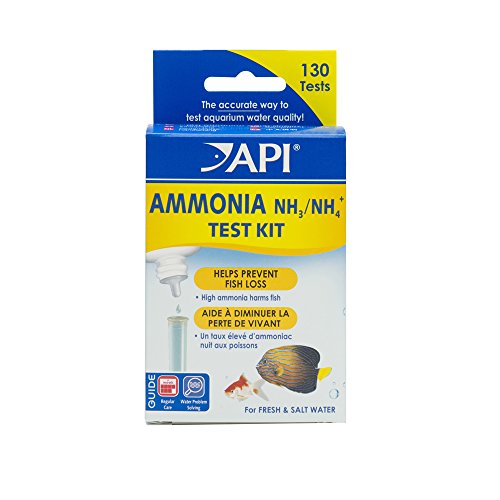
The API Ammonia 130-Test kit uses liquid testing reagents to measure ammonia across a 0–8 ppm range. It includes two bottles of testing solution, two color cards, and one test tube with cap. Best for hobbyists who want detailed color matching and a proven track record for freshwater or saltwater setups. Use this kit to monitor ammonia levels during tank cycling, changes, or after stock additions. Caution: color interpretation requires good lighting for accurate readings.
AAwipes 8-in-1 Test Strips (50 Strips)

This 8-in-1 strip kit covers ammonia along with pH, alkalinity, hardness, and other key parameters. It’s designed for quick results in minutes with color-chart interpretation. Best for active community tanks and hobbyists who need a broad snapshot of water quality. Choose this if you want a single kit to screen multiple conditions; avoid if you require the most precise ammonia reading or if you test in extremely low ammonia ranges.
HOVIRAN Ammonia Test Strips (50 Count)

HOVIRAN strips offer a straightforward dip-and-read method, focusing on ammonia nitrogen. This 50-count box is designed for regular monitoring in both freshwater and saltwater tanks. Best for budget-conscious users who perform routine checks, with the caveat that strip accuracy can vary slightly by batch and lighting conditions when comparing colors.
SJ WAVE 11 in 1 Aquarrium Test Strips

This kit provides 11 parameters, including ammonia, with a single-strip format to simplify testing. Best for hobbyists who want a broad view of water chemistry without separate tests for each parameter. Limitation: as a multi-parameter kit, it may trade some degree of precision for convenience on ammonia guidance. Use alongside a dedicated ammonia test for higher accuracy when needed.
Hanna Marine Ammonia Checker HI784

The Hanna HI784 is a digital ammonia checker offering a direct reading on an LCD screen. It is more accurate and easier to read than many chemical test kits, making it suitable for precise monitoring in sensitive tanks. Best for users who prefer digital readouts and quick verification, with the trade-off of higher upfront cost and the need for occasional sensor maintenance.
Buying Guide: Key Purchase Considerations
What format fits your routine?
- Liquid test kits (like API Ammonia 130) tend to be highly accurate and widely trusted for freshwater and saltwater use. Choose these if you prefer a proven method with precise color matching.
- Test strips (like Mars, HOVIRAN, SJ WAVE) offer quick results and convenience, ideal for frequent checks or busy setups. They are generally less expensive per test but can vary in color interpretation.
- Digital meters (Hanna HI784) provide easy-to-read numbers, helpful for beginners and those who want fast, repeatable results with less subjectivity.
How many parameters do you monitor?
- If you want a focused ammonia reading, a dedicated ammonia test (liquid or strips) is best.
- For broader water quality oversight, multi-parameter strips (11 in 1) can save time, but verify ammonia accuracy with a separate test when precise levels matter.
Tank type and maintenance needs
- Freshwater tanks often need more frequent ammonia checks during cycling or heavy feeding periods.
- Saltwater tanks may show ammonia balance differently; ensure the kit supports salinity considerations.
Practical Tips
- Always read results within the recommended window; delayed readings can mislead interpretations.
- Match lighting when comparing colors to charts to reduce misreads.
- Keep test bottles and strips away from direct sunlight to preserve accuracy.
FAQ
- Q: How often should I test ammonia in a new tank? A: Test during cycling and after any major changes, at least 2–3 times per week.
- Q: Can I rely on strips for exact ammonia levels? A: Strips are convenient but can be less precise. Use a liquid kit or digital meter for precise decisions.
- Q: What range of ammonia is safe for most fish? A: In most standard freshwater and saltwater setups, 0–0.25 ppm is often considered safe; higher levels require action.
- Q: Do digital ammonia testers need calibration? A: Some do; follow the manufacturer’s calibration instructions for accuracy.
- Q: Should I replace strips with a liquid kit? A: Consider a liquid kit for critical phases (cycling, high feeding) and strips for ongoing quick checks.
- Q: Can I use ammonia test results to guide water changes? A: Yes. If readings rise above safe thresholds, perform partial water changes and investigate filtration or feeding practices.