The buyer’s intent is clear: find a reliable, safe heater for a 75 gallon tank that keeps water temperature stable with smart protections. This guide highlights five top options, explains who they’re best for, and helps you compare features like over‑temperature protection, dry‑run shutoff, and installation ease. Ideal buyers include reef keepers, community tank enthusiasts, and beginners upgrading from smaller heaters. Below is a quick comparison table of the chosen products.
| Product | Best For | Wattage | Key Safety | Notes |
|---|---|---|---|---|
| HiTauing 300W with Digital Display | Moderate biomes seeking quick heat | 300W | Over-temp and leaving-water protections | Long cord, clear display |
| Orlushy 500W Submersible | Medium-large tanks needing robust heating | 500W | Auto shutoff at set temp; explosion-proof quartz | Two suction cups |
| HiTauing Upgraded 300W/500W | Flexible wattage for varied setups | 300W/500W | Leaving-water protection; intelligent control | Silent and sturdy |
| Hygger 300W Digital Controller | Clear digital control with alarms | 300W | Overheat/Out-of-water protections; audible alarm | Long power cord |
| AHJ 500W For 75–120 Gallon | Two-tank versatility with precise control | 500W | Over-temp and anti-dry protection | PID-level temp sensing |
HiTauing Aquarium Heater, 300W With Digital Display
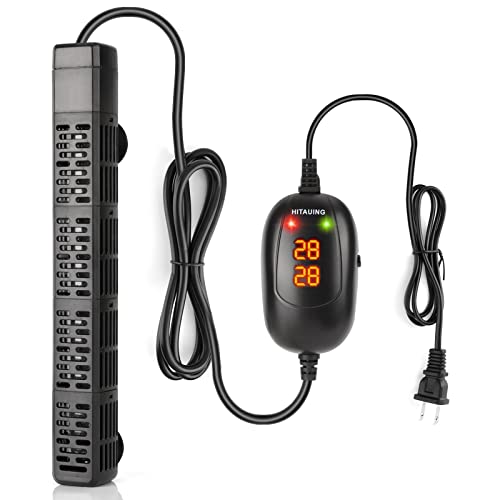
This 300W heater is designed for 40–75 gallon tanks, offering rapid heating with a digital Fahrenheit/Celsius display. It uses a nickel-chromium heating wire and quartz glass, inside a protective ABS shell. It includes automatic shutoff when water is low or the set temperature is reached, and a green indicator confirms safe operation. Best for hobbyists who want quick heating and a visible temperature readout. Caution: ensure full water immersion to avoid false readings.
Orlushy Submersible Aquarium Heater, 500W
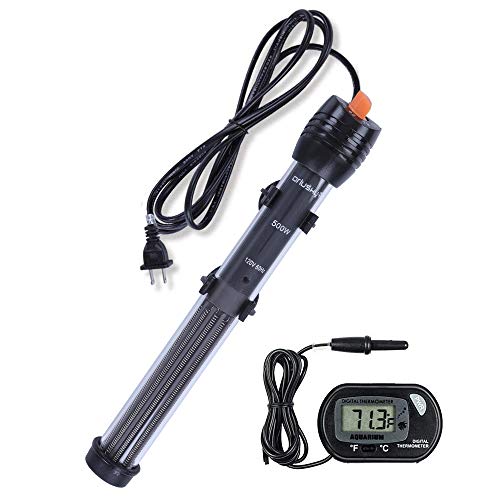
The 500W Orlushy heater targets 40–75 gallon tanks with a reliable adjustable thermostat and automatic shutoff at target temperature. Its explosion-proof quartz glass and 2mm thick construction provide durability for both saltwater and freshwater environments. Best for larger 75‑gallon systems that need steady heat with robust protection. Limitation: higher wattage requires adequate tank space and wiring considerations.
HiTauing 300W LED Digital Display Heater
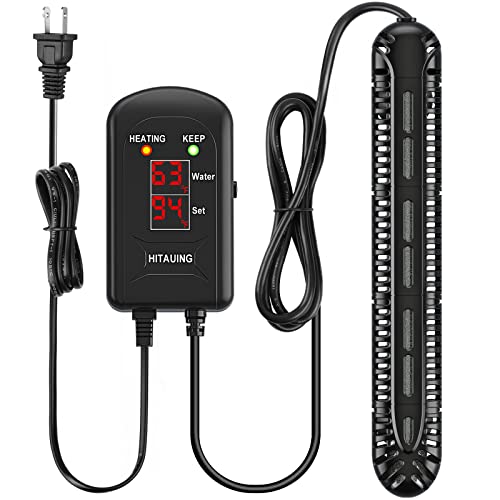
This model delivers a balanced 300W heating for 40–75 gallon tanks with an LED digital display showing current temperature, setpoint, and status. It includes two suction cups and a long cord for flexible placement. Best for aquarists who want clear, at-a-glance temperature readings and strong safety features including leaving-water protection. Choose this if you value precise digital feedback over basic indicators. Limitation: more electronics may require careful maintenance to avoid moisture exposure.
Hygger 300W Digital Controller Heater

The Hygger 300W heater aims at 40–80 gallon tanks and includes a digital LED controller with an adjustable range of 59°F–93°F and ±1°F accuracy. It features multiple protections, including auto shutoff for high temp and low water levels, and a long 10‑foot cord. Best for aquarium owners wanting a precise, alarmed system with clear on-tank readability. Limitation: some users report needing careful calibration to avoid slight deviations from target temps.
AHJ Aquarium Heater, 500W For 75–120 Gallons

The AHJ heater targets larger 75–120 gallon setups with accurate temperature control to within approximately ±1°F. It includes anti-dry burn, over‑temperature protection, and an auto‑shutoff feature if water levels drop. This makes it suitable for users who want rapid heating with strong safety protections. Best for larger displays or mixed-species tanks. Limitation: higher wattage may require careful placement to avoid hot spots in very dense aquascapes.
Buying Guide: Key Purchase Considerations
What tank size and shape should you match? For a 75 gallon tank, 300–500W is typically appropriate, depending on whether you keep saltwater, freshwater, or both. Consider the heater’s immersion depth, the length of the power cord, and whether you prefer a digital display or simple LED indicators.
Which safety features matter? Look for automatic shutoff when the water level is too low, leaving-water protection, and an over‑temperature cutout. Some models include alarms or error codes to alert you when issues arise. Stable temperature control with a fast response time helps prevent stress to fish and corals.
How important is installation flexibility? Heaters with long cords and multiple suction cups offer easier placement in irregular enclosures. A digital controller or a remote sensor can simplify adjustments without disturbing the tank occupants.
What about durability and materials? Quartz glass and nickel‑chromium heating elements provide robust heating and resistance to corrosion. A protective ABS shell can reduce accidental contact with hot surfaces in community tanks or closed habitats.
Which model fits your setup best? If you want a balance of price, features, and reliability, the 300W class with a digital display is a solid baseline. If you need to heat larger volumes or anticipate room temperature variation, a 500W option can be more efficient and faster.
FAQ
- What wattage is best for a 75 gallon tank? – Typically 300W to 500W, depending on whether you maintain saltwater, freshwater, or both and the room temperature.
- Do these heaters prevent overheating? – Yes, most include over‑temperature protection and auto shutoff when the target temp is reached or water level drops.
- Are digital displays worth it? – Digital readouts provide precise temperature feedback and easier monitoring, which can reduce guesswork.
- Can I use a single heater for multiple tanks? – Some models offer higher wattage (500W) suitable for larger or dual-tank setups, but always confirm tank volume and clearance before reuse.
- Is installation complicated? – Most models are submersible with suction cups; follow manufacturer guidelines for immersion depth and cord routing.
- Should I choose a model with alarms? – Alarms help alert you to issues like overheating or dry-running, beneficial for new aquarists and busy households.