Choosing a reliable 100 watt aquarium heater is essential for maintaining a stable tank environment. The following selections cover a range of popular models known for precise temperature control, safety features, and compatibility with typical 10–30 gallon setups. Each product highlights key features to help you compare at a glance.
| Product | Brand | Gallon Range | Key Feature |
|---|---|---|---|
| Fluval M 100-Watt Submersible Heater | Fluval | Up to 30 gal | Mirror finish, compact design |
| Orlushy Submersible Aquarium Heater | Orlushy | 10–20 gal | Explosion-proof glass, easy adjustment |
| Tetra 26446 HT Submersible Heater | Tetra | 10–30 gal | Electronic thermostat, indicator lights |
| AQUANEAT Aquarium Heater | AQUANEAT | 15–30 gal | Digital thermometer, 6ft cord |
| NICREW 100W Heater with Dual Sensors | NICREW | 10–20 gal | Dual sensors, overheat protection |
Fluval M 100-Watt Submersible Heater

The Fluval M 100-Watt Submersible Heater provides consistent and precise temperature control for aquariums up to 30 gallons. It is built with high-quality European components to deliver reliable performance. Its reflective exterior helps the unit blend with tank surroundings, preserving aesthetics. A slim, compact form allows discreet placement without crowding the tank interior.
Orlushy Submersible Aquarium Heater

Orlushy offers a 100W option suitable for 10–20 gallon tanks. The heater includes two suction cups and a free thermometer for monitoring. It features a thickened quartz glass construction for durability in both freshwater and saltwater setups. Adjustment is straightforward with a temperature dial, though fine-tuning may require small increments.
Tetra 26446 HT Submersible Heater
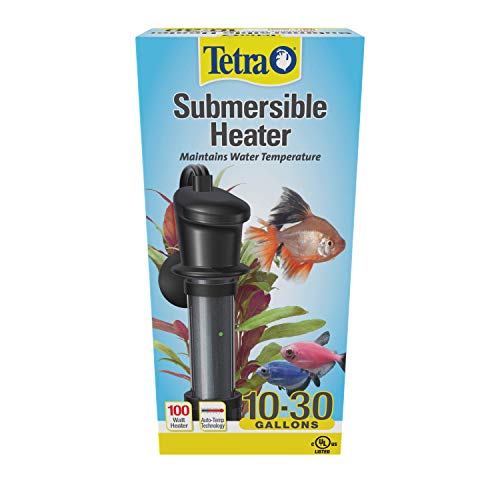
The Tetra 100-Watt heater includes an electronic thermostat to maintain a consistent 78°F target in tanks sized between 10 and 30 gallons. An indicator light shows when heating is active and when the heater is on standby, helping you monitor operation at a glance. It is designed for reliable daily use across freshwater and light marine setups.
AQUANEAT 100W Aquarium Heater
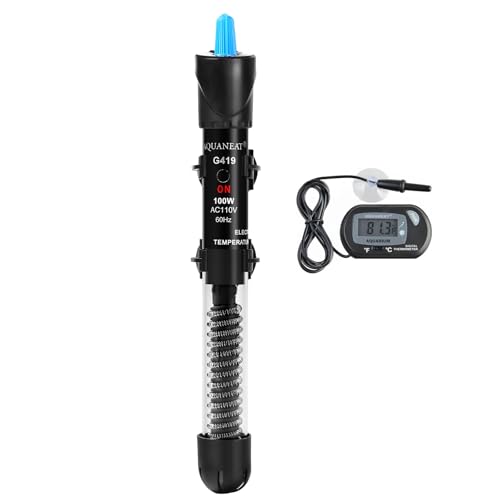
AQUANEAT’s 100W heater is designed for 15–30 gallon tanks and includes a 6-foot power cord. It features an easy-to-read top dial for temperature control (65°F to 89°F) and a red light indicator that signals when the target temperature is reached, ensuring stable warmth for marine and freshwater environments alike.
NICREW 100W Aquarium Heater

NICREW’s 100W heater features dual sensors and an external controller for precise temperature readings. It includes overheat protection to automatically turn off if water exceeds 98°F (36°C), adding a safety layer for both novice and experienced aquarists. Suitable for 10–20 gallon tanks, it supports stable conditions in varied water conditions.
Buying Guide: Key Purchase Considerations
- Tank size compatibility: Most 100W heaters are suited for 10–30 gallon tanks. Match wattage to your actual display size and water volume for efficient heating.
- Temperature control accuracy: Look for external controllers or dual-sensor systems for precise readings and stable temperatures, especially in mixed-species tanks.
- Safety features: Overheat protection, dry-run shutoff, and explosion-proof or thickened glass construction reduce risk in both freshwater and saltwater environments.
- Ease of installation: Suction cups or mounting hardware, along with a long power cord, simplify placement and maintenance behind decor and plants.
- Maintenance and indicators: Clear indicator lights, alarms, and easy access to adjustment controls help maintain consistent tank conditions with minimal effort.
- Durability and materials: Quartz glass and corrosion-resistant housings extend heater life in varied water chemistries; ensure the device is rated for your tank’s salinity level.
- Visibility and aesthetics: Slim, low-profile designs or reflective finishes help the heater blend with tank aesthetics without stealing focus from décor.
When selecting a 100W heater, consider your tank’s inhabitants, required temperature range, and whether you prefer an internal thermostat with external monitoring. The models above cover common needs, from compact, hidden units to feature-rich options with robust safety protections. Always follow manufacturer installation instructions and regularly inspect heaters for signs of wear or malfunction.